

How to Measure the Success of Your SEO Campaign – 2026
SEO changes so damn fast that half the time it feels like you’re just trying to keep up with Google’s mood swings. One month your rankings look great, the next you’re staring at your analytics like, “What happened? Did I miss an update or what?”
That’s honestly why tracking your SEO properly isn’t optional anymore—it’s survival. Doesn’t matter if you’re running a tiny personal site or juggling dozens of pages for a big brand, you have to know what’s going on behind the scenes. Otherwise, you’re basically driving blindfolded and hoping you don’t crash.
And yeah, metrics aren’t exactly the most thrilling thing to stare at. Half of them feel like numbers that only make sense after your third coffee. But they’re still your compass. They’re the only way to know what’s actually working, what’s quietly falling apart, and what Google suddenly decided to “re-evaluate” without warning.
Plus, in 2025–2026, with AI-generated content everywhere and search engines getting smarter (and honestly, sometimes weirder), guessing your way through SEO is a disaster waiting to happen.
So let’s break everything down in a simple, no-fuss way—no complicated jargon, no pretending SEO is some mystical art. Just the stuff you genuinely need to keep your campaign on track.
What Are Search Engine Metrics?
Search engine metrics are basically the numbers that tell you whether your site is behaving properly in Google’s eyes and whether actual humans find your stuff useful. They’re not magic, just measurements that help you make better decisions.

And yeah—they usually fall into four groups:
- Visibility stuff (how often you show up)
- Engagement stuff (what people do when they get there)
- Technical stuff (site health, speed, etc.)
- Conversion stuff (did people actually do anything?)
Not every metric matters to everyone, but together they paint a picture—sometimes a flattering one, sometimes… not.
Why Search Engine Metrics Matter
A lot of people think SEO = “rank high.” That’s kind of outdated thinking. Ranking by itself is honestly whatever if nobody clicks or buys anything.
Here’s why metrics matter:
1. You see what’s actually working
Sometimes you publish a piece you think is brilliant and it does nothing. Meanwhile, something you wrote half-asleep goes viral. Metrics tell you the truth, not what you assume.
2. They expose problems early
A sudden ranking drop? High bounce rate? Slow pages?
Metrics will scream at you before your revenue does.
3. Smarter decisions, fewer wasted hours
SEO already eats time. Metrics help you invest that time where it counts.
4. They tie SEO to actual business goals
Traffic is cute and all, but conversions are the real win. Metrics help you see if SEO is doing anything for your bottom line.
Also Read: The Ultimate Guide to SEO Keyword Research (Guide 2026)
Top Search Engine Metrics to Track in 2026
Alright, here’s the meat of it. None of this is new-new, but the way these metrics behave in 2026 is definitely different from five years ago.
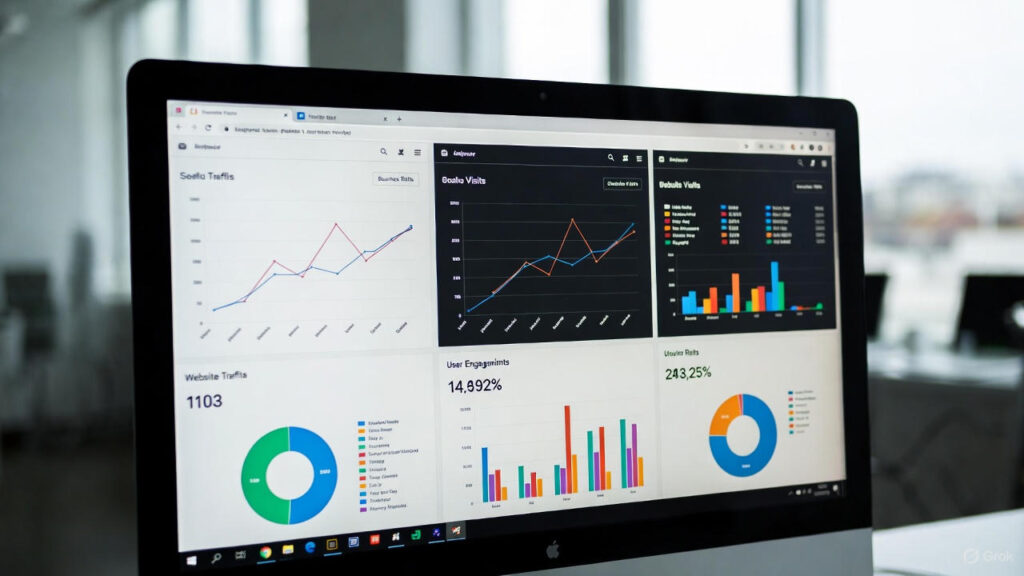
1. Organic Traffic
This one’s basic but important. It’s literally just:
“How many people came from search?”
Use Google Analytics or Search Console and watch how the graph moves. If it’s going up slowly, good. If it’s jumping around or dropping, something’s off—and no, it’s not always Google’s fault (but sometimes it is).
2. Keyword Rankings
Yes they still matter, but please don’t obsess over one keyword dropping from #5 to #9. That kind of thinking will drive you insane.
Look at:
- which keywords bring actual traffic
- which ones have intent that matches your content
- where competitors are overtaking you
Google cares more about intent now anyway, so ranking for a slightly different keyword than you expected isn’t a big deal if the traffic quality is right.
3. Click-Through Rate (CTR)
This is basically: “Did people bother to click your result, or did they scroll past like you weren’t even there?”
Formula: (Clicks ÷ Impressions) × 100
If your CTR is bad, maybe:
- your title is boring
- your meta description feels like it was written by a robot
- competitors have rich snippets and you don’t
You can’t force people to click, but you can make the listing feel more interesting.
4. Bounce Rate
A bounce means someone landed on your page and noped out instantly.
Sometimes it’s okay (like if your page literally answers one simple question), but often it’s:
- slow load time
- weird layout
- content not matching what they expected
- long intro before you get to the point
Lowering bounce rate is basically about respecting the reader’s time.
5. Dwell Time (Average Session Duration)
This shows how long people hang around before giving up and going back to Google.
Higher dwell time usually means your content hits the mark.
If it’s low, maybe:
- your content has fluff and people get bored
- the page feels heavy or cluttered
- internal links aren’t helping people move around
Quick fix: write like a human, not an essay generator.
6. Backlink Profile
Backlinks are still super powerful. Maybe not in the old-school 2012 way, but they still tell Google, “Hey, this site is worth something.”
Track:
- number of linking domains
- the authority of those sites
- weird spikes (hello spam bots)
- the text used to link to your pages
Tools like Ahrefs or Moz can show you the full picture, though sometimes you’ll see junk links no matter what you do.
Also Read: 5 Proven SEO Techniques That Will Boost Your Rankings
7. Page Load Speed
People hate slow sites. You probably do too.
Ideal is under 2.5 seconds, though honestly the faster the better.
If your page is crawling, it’ll hurt your rankings and annoy your visitors.
Run tests on:
- Google PageSpeed Insights
- GTmetrix
And yeah, image compression alone fixes like half the speed issues out there.
8. Mobile Usability
Google looks at your mobile version first, not desktop.
So if your site looks okay on desktop but looks like a broken puzzle on a phone, that’s a problem.
Check:
- readable fonts
- buttons that aren’t microscopic
- no weird horizontal scrolling
- it loads fairly quickly
Mobile-first is not optional anymore.
9. Core Web Vitals
These are Google’s “is this site user-friendly or not?” metrics.
- LCP: is your main content loading too slowly?
- FID/INP: do things respond when people tap?
- CLS: does your layout jump around like a caffeinated squirrel?
Get these right and user experience improves, which often leads to better SEO performance.
10. Conversion Rate
All the traffic in the world is worthless if nobody takes action.
Conversions can be:
- purchases
- email signups
- calls
- form fills
- downloads
- whatever your goal is
If your conversion rate sucks, you may not have an SEO problem—you might have a messaging or UX problem.
How AI Is Changing Search Engine Metrics
AI has shoved itself into every corner of SEO—from writing content (sometimes too much of it) to analyzing data. The nice part is that AI actually makes metric analysis easier.
AI can:

- predict ranking changes
- point out patterns you’d miss
- warn you about drops
- suggest content updates
- crawl massive datasets instantly
- tell you if backlinks look sketchy
Instead of reacting when things break, you can actually prepare now.
How to Improve Your Search Engine Metrics
Some real, practical things you can do:
- run website audits (you’d be surprised what you miss)
- rewrite titles that feel flat
- stop forcing keywords and match user intent instead
- use internal links like a map, not clutter
- fix slow loading pages
- clean up your mobile design
- add schema whenever it makes sense
- track your metrics weekly so you don’t drift off-course
Little improvements add up.
Partner with Experts to Master SEO Metrics
You can DIY SEO metrics, sure. But interpreting them—and knowing what action to take next—can get messy fast. That’s where having an expert team really helps.
At Wildnet Technologies, we mix actual human expertise with AI tools so you get strategies that make sense, not just numbers that confuse you. Whether you want better rankings, cleaner site health, or more conversions, we help you connect all the dots.
FAQs
Q1. What are search engine metrics used for?
To track your website’s visibility, engagement, and performance in search.
Q2. Which SEO metric is most important?
Usually organic traffic + conversions. The combo tells the full story.
Q3. How often should I check my SEO metrics?
Weekly quick checks, monthly deep dives.
Q4. Can AI tools track SEO metrics?
Yes, most AI tools do automated tracking and can even predict issues.
Q5. Why choose Wildnet Technologies for SEO?
Because we blend expert strategies with AI tools so you get both brains and efficiency.